
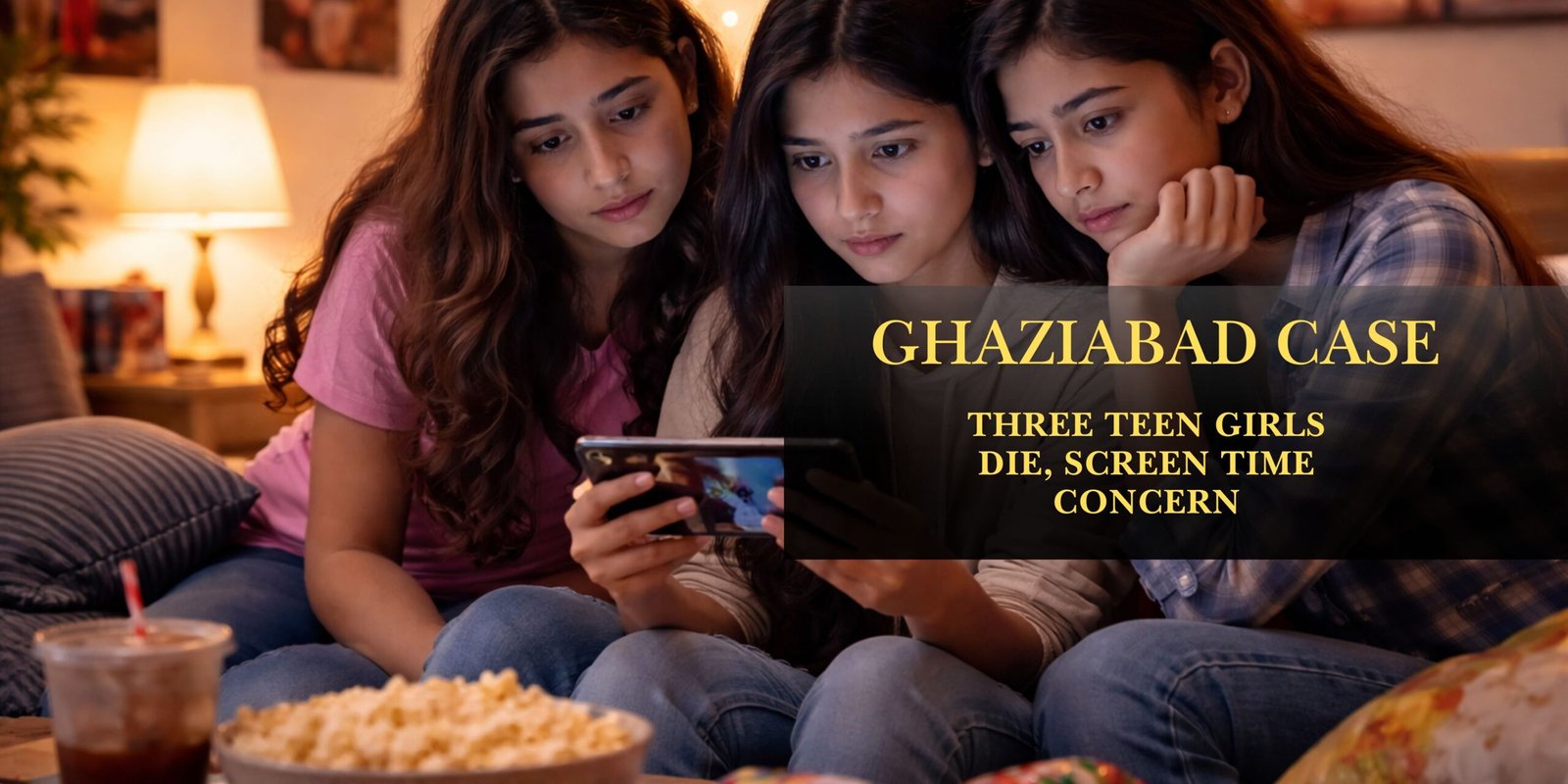
Ghaziabad Case: On February 4, 2026, early in the morning around 2:15 a.m., a heartbreaking event took place in Bharat City Society, Ghaziabad, near New Delhi. Three sisters — Pakhi (12), Prachi (14), and Nishika (16) — died by suicide after jumping from the ninth floor of their home.
The police found a long handwritten note and a diary in their room. In this note, the sisters apologized to their parents and wrote about how they could not live without the online world that had taken over their minds and hearts.
Their father, told investigators that they had become deeply involved in online Korean games and culture, especially a Korean task-based game that kept them hooked for weeks and months.
The sisters had even stopped going to school regularly — the eldest was still in Class 4 despite being 16 years old, and all three spent most of their time at home together.https://jinspirex.com/world-cancer-day-roz-ki-8-galtiyan-jo-cancer-badha-rhi-hain/
In the suicide note, they wrote things like, “Sorry Papa… we cannot leave the game. Korea feels like life itself.” This shows how much their minds were caught up in digital worlds and ideas that slowly overpowered their real feelings and real connections.
This tragic Ghaziabad case has shaken the nation. It has created a deep discussion about how too much screen use — from games to drama clips and videos — can affect young minds emotionally, socially, and psychologically.
It is a reminder that screens are not just tools — they can become powerful emotional anchors if not handled carefully.
Ghaziabad Case: Why This Happens — Emotional and Digital Reality
Today, young people spend hours on screens — watching videos, playing games, connecting online, and following foreign culture trends such as Korean shows, music, and fictional characters. While many of these can be entertaining, problems begin when screens start replacing real life, real conversations, and real relationships.
In the Ghaziabad case, the sisters were not only playing games but had started identifying so deeply with online roles, characters, and foreign pop culture that their sense of real identity outside the screen slowly weakened.
What’s more worrying is the growing trend of blind imitation. Many teenagers today copy everything they see online — dressing like influencers or fictional characters, doing similar makeup, posing the same way for photos, using the same slang, and trying to live a “reel life” instead of a real one. Trends like K-drama styling, cosplay-like dressing, aesthetic poses, and social media role-play cultures are becoming more about escaping reality than simple fun. When personality starts getting shaped by trends instead of values, it becomes unhealthy.
Just like past dangerous online challenges pushed children toward emotional harm, digital content today can strongly influence thoughts, feelings, and behaviour — especially in young minds that are still forming their identity.https://jinspirex.com/budget-2026-paison-se-aage-soch-ki-kranti-vikas-ki-nai-disha/
This incident shows how screen time without emotional balance can quietly turn into a space of escape, confusion, and emotional dependency rather than learning and growth.
10 Practical Family Rules for Healthy Screen Time
To prevent any family from suffering a similar loss, here are ten simple and realistic rules that can help parents and children build safer and healthier digital habits:
1. Set Daily No-Phone Hours
Make specific times every day without any phone or screens, such as during meals, morning routines, or family time. This helps strengthen real conversations and human connection.
2. Watch Content Together
Instead of letting a child use screens alone, join them while they watch or play. Ask questions like:
- “What is this game about?”
- “How does this make you feel?”
This creates space for understanding their thoughts.
3. Keep Phones Away Before Sleep
Night screen use can disturb sleep and emotions. Agree on a rule like:
“No screen one hour before bed.”
Better sleep = clearer thinking.
4. Have Screen-Free Rooms or Zones
In every home, choose areas like the dining room or bedroom where phones are not allowed. This keeps rest time real and peaceful.
5. Talk Every Day With Your Children
A small 10-minute heart-to-heart talk works more than long rules. Ask gently about their day, feelings, friendships, school, and worries.
6. Share Real Life Activities
Encourage reading, drawing, storytelling, walks, games outside, and time with family. These help children develop creative thinking and emotional strength.
7. Know What They Are Watching
Many apps and games show content that feels exciting but can be emotionally heavy. Be aware of what your child watches and talk about it in simple terms.
8. Agree on Screen Rules Together
Instead of forcing rules from above, involve children in making rules. When they help choose limits like screen time hours, they are more likely to follow them.
9. Watch for Emotional Changes
If a child becomes quiet, sad, angry, or distant, it might be more than just screen use. These emotional changes need attention, not only a screen ban.
10. Seek Support When Needed
If you feel worried, talk to counsellors, teachers, or trusted adults. There is no shame in seeking help — emotional health matters more than anything.
Korean Lover Game: Why These Rules Matter
This tragic Ghaziabad case did not happen overnight. Screens didn’t magically force them — the girls were already struggling emotionally and spending almost all their hours inside their digital world. When parents tried to restrict them without talking about their feelings and needs, the girls felt alone and trapped.
Healthy rules don’t just block screens — they build trust, connection, and emotional understanding between parents and children. When a child feels heard at home, they don’t feel the need to rely only on digital worlds for comfort.
Korean Game: A Call to Families and Communities
This story is rare — but the patterns are not. Across the world, many children struggle quietly with screen addiction, loneliness, and emotional stress without showing it outwardly.
We all need to remember that screens should not replace people, relationships, or purpose.
A phone can connect, but love, support, presence, and understanding heal.
Final Thought
The Ghaziabad case is a painful reminder that every child deserves real attention, care, and connection — not just Wi-Fi, trends, or online worlds.
If we unite as families, communities, and friends to build healthier screen habits, then young hearts can grow stronger, rooted in life, not lost in screens.
It is also time for us to stop blindly copying every foreign trend that appears online. Interestingly, many other cultures proudly protect their own traditions, while we often rush to imitate others — from dressing styles and makeup to slang, poses, and digital lifestyles.
India already has a rich, grounded, and value-based culture that teaches balance, family bonding, and emotional strength. Instead of chasing every passing trend, we should feel confident in our own identity and support what keeps our children safe, connected, and rooted in real life.
https://www.hindustantimes.com/cities/noida-news/ghaziabadloud-noise-and-then-screams-jolts-neighbours-101770233043419.html