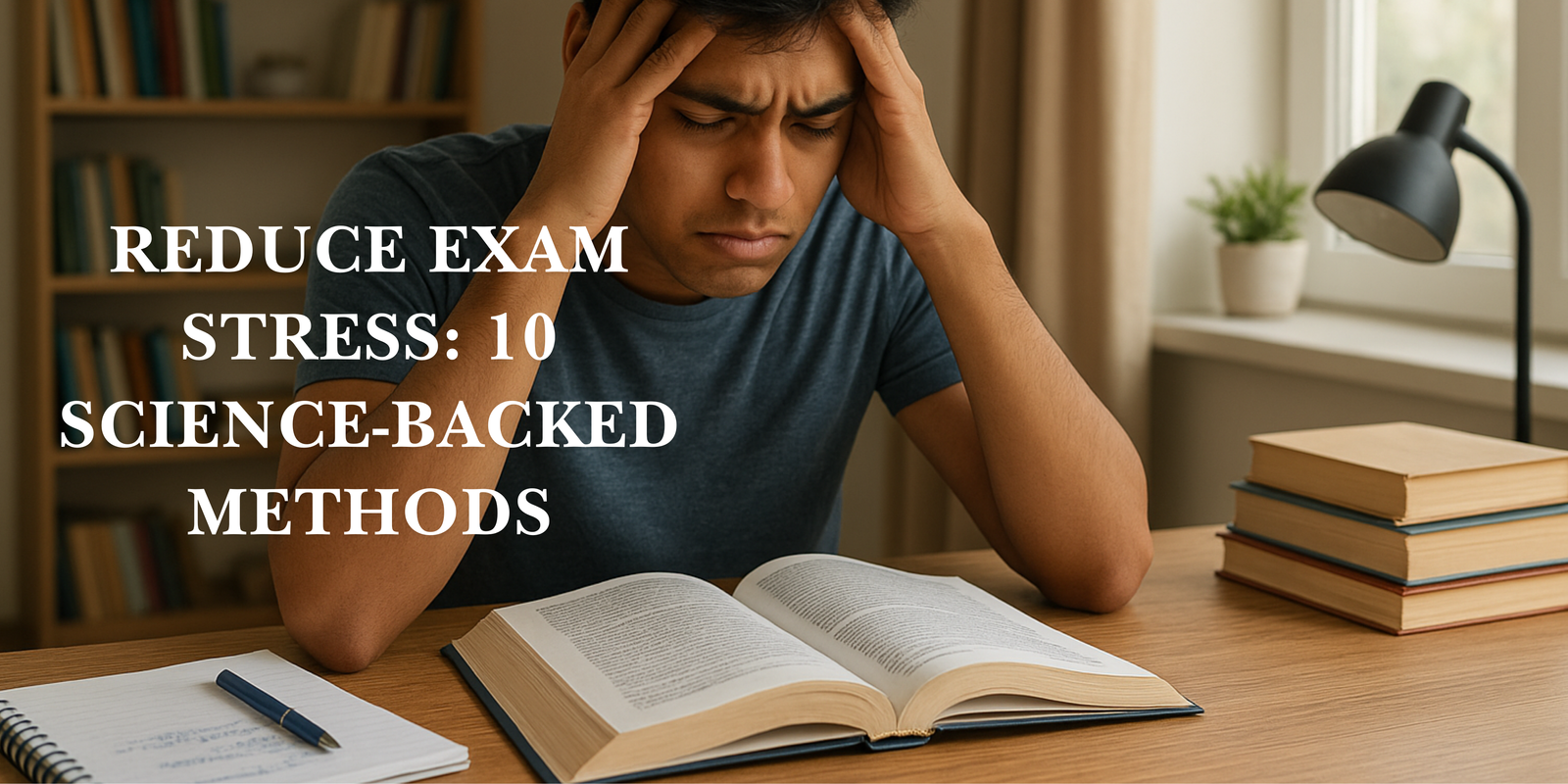
Reduce Exam Stress: As exam season begins, one feeling quietly takes over almost every student — pressure.
- Students feel the pressure to score well.
- The future can seem to depend on just one report card.
- There is often the pressure to meet parents’ expectations.
Books are open, but the mind is restless.
Notes are ready, yet the heart feels heavy.
Many students don’t fear the exam paper as much as they fear the question —
“What if I don’t do well?”
This is exactly why Prime Minister Narendra Modi started “Pariksha Pe Charcha.”
Not to teach students how to top exams, but to remind them of something far more important —
that exams are a part of life, not the definition of life.
At Pariksha Pe Charcha, students ask real questions:
- “Why do I panic before exams?”
- “How do I handle pressure from expectations?”
- “What if I fail?”
These are not academic questions.
These are emotional questions, and they come from millions of students across the country.
Still, when exams are close, motivation speeches alone don’t always help.
Stress feels real.
Anxiety feels physical.
The heart beats faster, focus drops, and confidence shakes.
So the real question becomes:
How can students reduce exam pressure in a practical, scientific, and realistic way — not just in theory, but in real life?
That is exactly what this article is about.
Here, you will find 10 science-backed methods that psychologists and researchers recommend to manage exam stress.
Along with that, every scientific term used is explained in simple language, so students clearly understand:
- what actually works,
- why it works, and
- how to apply it during exam time.
Reduce Exam Stress: What Is Exam Pressure? (Simple Science)
When the brain feels threatened, it releases a stress hormone called cortisol.
Cortisol (Stress Hormone):
A chemical released by the body during fear or pressure.
High cortisol = anxiety, fear, and poor concentration.
Exam pressure increases cortisol because students think:
- “What if I fail?”
- “What if I disappoint my parents?”
So the pressure is mental, not academic.
1. Deep Breathing: Calm Your Nervous System
Scientific Explanation:
Deep breathing activates the parasympathetic nervous system.
Parasympathetic Nervous System:
The part of the nervous system that calms the body and slows heart rate.
How to do it:
- Inhale for 4 seconds
- Hold for 4 seconds
- Exhale slowly for 6 seconds
This sends a clear signal to the brain:
“I am safe.”
2. Stop Worst-Case Thinking (Cognitive Reframing)
Scientific Explanation:
This method comes from Cognitive Behavioral Therapy (CBT).
Cognitive Reframing:
Changing negative thoughts into realistic and balanced thoughts.
❌ “This exam will ruin my life.”
✅ “This exam is important, but not my whole life.”
Thoughts control emotions.
Change the thought, reduce the pressure.
3. Use the Pomodoro Method
What is the Pomodoro Method?
It is a study technique based on how the brain naturally focuses.
Why it works (Science):
The brain can stay focused for 30–40 minutes. After that, mental fatigue starts.
How to apply it:
- Study for 30 minutes (full focus)
- Take a 5-minute break
- Repeat the cycle
Why breaks matter:
Breaks help reset attention and prevent burnout.
Avoid mobile phones during breaks. Walk, stretch, or relax your eyes.
4. Sleep Is Not Optional, It’s Scientific
Scientific Explanation:
Sleep helps in memory consolidation.
Memory Consolidation:
The process by which the brain stores what you studied.
Studies show that lack of sleep reduces recall by up to 40%.
- 6–7 hours of sleep improves learning
- Late-night studying increases stress hormones
5. Physical Movement Releases Stress Chemicals
Scientific Explanation:
Exercise releases endorphins.
Endorphins:
Natural chemicals that improve mood and reduce stress.
Simple activities:
- 10-minute walk
- Light stretching
- Stair climbing
These reduce cortisol and improve focus.
6. Avoid Comparison (Social Psychology)
Scientific Explanation:
Comparison activates social anxiety.
Social Comparison:
Judging yourself based on others’ performance.
Thoughts like:
- “They are better than me”
- “Everyone is ahead of me”
This lowers confidence and increases stress. Every student has a different learning pace.
7. Do Not Make Exams Your Identity
Scientific Explanation:
Stress increases when self-worth depends on performance.
Identity Attachment:
Believing your value depends on success or failure.
❌ “I am my exam result.”
✅ “I am a student giving an exam.”
This mindset protects mental health.
8. Visualization: Train the Brain Before the Exam
Reduce Exam Stress: Scientific Explanation:
Used in sports psychology.
Visualization:
Mentally imagining success to prepare the brain.
How to practice:
- Imagine sitting calmly in the exam hall
- Visualize reading questions confidently
The brain responds to imagination almost like reality.
9. Avoid Information Overload
Scientific Explanation:
Too much information causes cognitive overload.
Reduce Exam Stress: Cognitive Overload:
When the brain receives more information than it can process.
Too many strategies = confusion + stress.
Choose one reliable source and trust it.
10. Focus on the Process, Not the Result
Scientific Explanation:
Process focus reduces anxiety and improves performance.
Reduce Exam Stress: Process Focus:
Concentrating on effort and actions, not outcomes.
Focus on:
- What you can study today
- How sincerely you can prepare
Results are not fully controllable.
Effort is.
Reduce Exam Stress: Key Learnings for Students
1. Minimalism (Aparigraha)
Reduce expectations, not effort—less mental load creates more clarity.
2. Ahimsa (Non-Violence Toward Self)
Being kind to your own mind is the first form of non-violence.
3. Samta (Balance / Equanimity)
Stay balanced in success and failure; calmness is real strength.
https://www.savethestudent.org/extra-guides/top-tips-to-beat-the-exam-stress.html
Reduce Exam Stress: Final Thought
Stress does not disappear completely.
But with the right methods, it becomes manageable.
If you apply even 2–3 of these science-backed techniques,
you can face exams with more calm, clarity, and confidence.
All the best to all students! Prepare well, stay calm, and give your best!
Also Read: https://jinspirex.com/natures-classroom-10-lessons-that-guide-life/